What a protein calculator actually estimates
A protein calculator converts a few personal inputs into grams per day. The useful output is a transparent starting target, not a claim that one number is perfect. Your weight describes the amount of tissue the estimate is trying to support, activity gives context for training and recovery, and the goal helps choose a sensible point within a range.
This is different from the full Macro Calculator on this site. The macro tool builds a calorie budget and then shows protein, carbohydrate, and fat together. The protein calculator guide stays focused on daily protein, meal portions, and the questions people ask after seeing a gram target.
- Daily grams are easier to act on than an unexplained percentage.
- The estimate is a planning experiment that should be checked against real-life consistency.
- Protein supports many body functions, but more is not automatically better for every person.
Choose inputs for a protein calculator by weight
Start with current body weight in kilograms or pounds, then use the same unit system throughout your notes. If daily weigh-ins vary, a recent average is usually more useful than one unusually high or low reading. A protein calculator by weight cannot correct a weight entry that describes a past goal, so keep the input tied to the person you are planning for today.
Activity and goal refine the estimate. A desk-based week with occasional walks is not the same as frequent resistance training or physical work. Choose the description that matches the whole week, including rest days. If you are unsure, pick the modest option and let your two-week review provide evidence rather than selecting the highest setting to chase a larger number.
- Use body weight in kg or convert pounds before applying a grams-per-kilogram setting.
- Count normal movement and training, not only the hardest session.
- Keep age, health context, and goal honest; the formula cannot infer missing information.
- People under 18, pregnant people, and anyone with a medical condition need individualized guidance.
Set a protein intake calculator range for your goal
The calculator's balanced setting begins at 1.6 grams per kilogram of body weight, while the higher-protein setting begins at 2.0 g/kg. These are transparent planning preferences used by this site, not universal prescriptions. A lower or higher target can be reasonable when a qualified professional has a different method, when food preferences make a plan hard to follow, or when health context changes the decision.
Goal labels help you compare the estimate without pretending that the goal changes your biology overnight. During fat loss, keeping protein steady can make meals more satisfying and provides a clear anchor while calories change. During muscle gain, protein works alongside progressive training, enough energy, sleep, and recovery. Maintenance often benefits from the simplest target you can repeat.
| Situation | Useful starting view | What to check next |
|---|---|---|
| General maintenance | Balanced protein target | Can you repeat it with normal foods? |
| Fat loss | Keep protein steady while calories change | Hunger, training, and the two-week trend |
| Muscle gain | Protein plus a modest energy surplus | Strength progress, recovery, and total calories |
| Medical or special context | Do not self-select a high target | Ask a qualified clinician or dietitian |
Worked example: a daily protein calculator result
Imagine a 75 kg adult who chooses the balanced 1.6 g/kg setting. The simple multiplication is 75 × 1.6, producing a planning target of 120 grams per day. The number is intentionally easy to audit: if body weight or the chosen setting changes, you can see why the result changes. Rounding to a practical whole number is fine because food labels and portions are not laboratory measurements.
That 120-gram target is a daily total, not a requirement to eat the same amount at every sitting. It also contributes calories: protein provides about four calories per gram, so 120 grams represents roughly 480 calories before the rest of the meal plan is considered. Use the full macro calculator when you want those calories placed alongside carbohydrates and fat.
- Write down the weight, grams-per-kilogram setting, and rounded result.
- Change one input at a time when comparing scenarios.
- Treat the example as arithmetic, not a promise about body composition or performance.
Adjust protein for weight loss or muscle gain
A protein calculator for weight loss should sit inside a complete calorie plan. Protein is one useful anchor, but the result still depends on total energy, fiber, food quality, activity, sleep, and whether the plan is realistic on weekends. Keep the target stable long enough to observe a trend instead of changing protein every time the scale moves for one day.
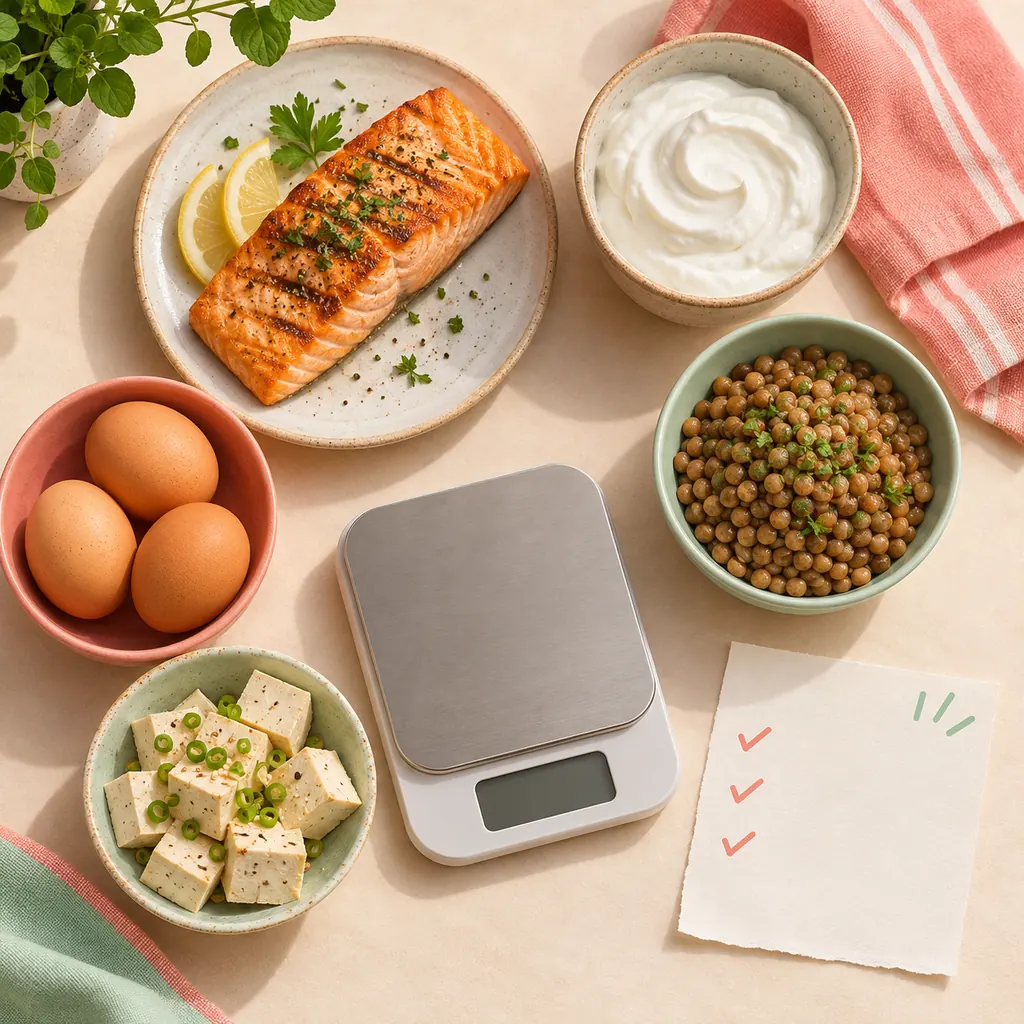
A protein calculator for muscle gain is also only one part of the picture. Training provides the stimulus; food energy and recovery make adaptation possible. If your target is difficult to reach, use ordinary meals, dairy or fortified alternatives, beans, tofu, eggs, fish, poultry, or other foods that fit your preferences. Supplements are optional and do not remove the need to check the overall diet.
- For fat loss, protect consistency before increasing the target.
- For muscle gain, pair protein with progressive resistance training and enough energy.
- For maintenance, choose the smallest target that supports a repeatable routine.
- If appetite, digestion, or recovery worsens, pause self-adjustment and ask a professional.
Turn daily grams into repeatable meals
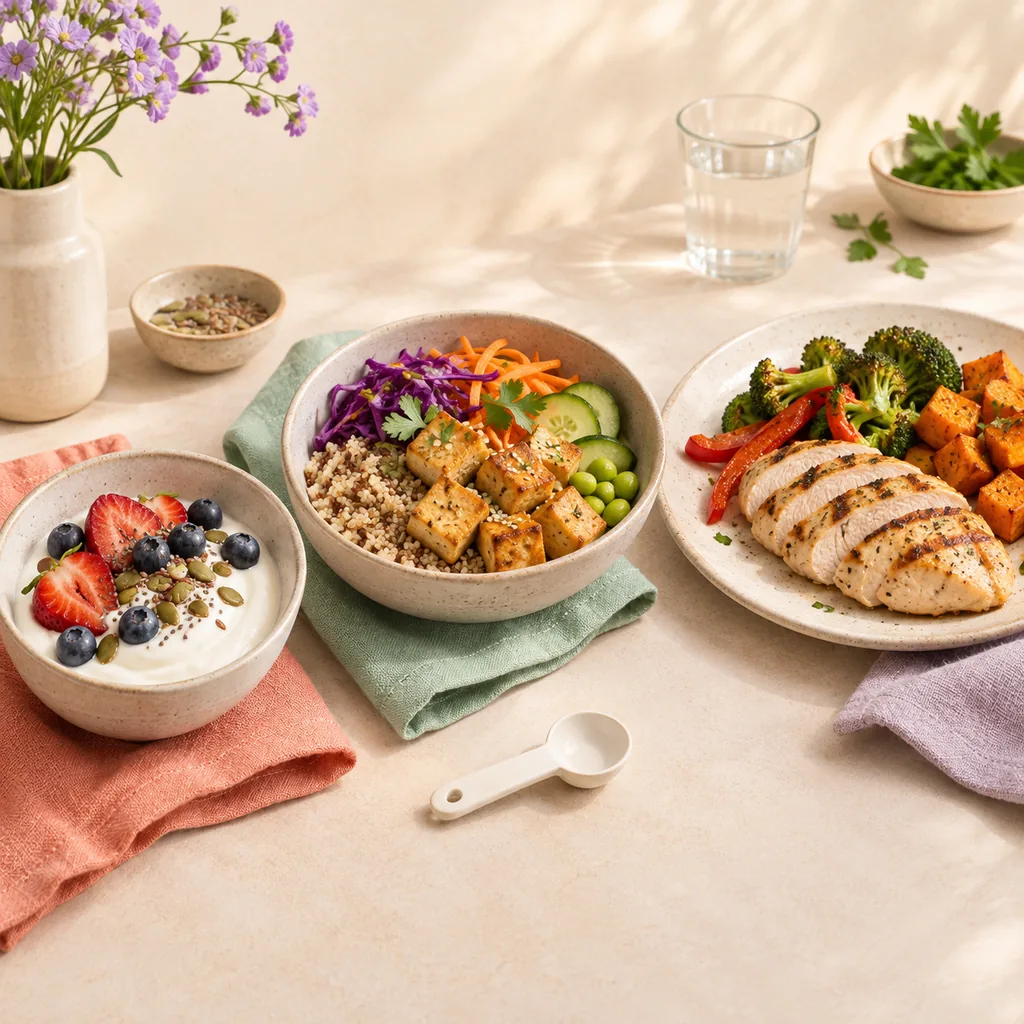
A protein per meal calculator is best understood as a planning shortcut. Divide the daily target across two to five eating occasions, then adjust for your schedule. For a 120-gram target, four roughly even portions would be about 30 grams each, but a lighter breakfast and larger dinner can work just as well. The daily total and the pattern you can repeat matter more than perfect symmetry.
Use labels and familiar portions to learn what 20, 25, or 30 grams looks like in your own foods. A meal can combine a protein food with carbohydrates, vegetables, and fat; the goal is not to make every plate a spreadsheet. When a target feels abstract, the simplest next step is to choose one reliable protein source for each meal and then fill in the rest of the plate.
- Pick a meal count that fits work, training, and family routines.
- Use the table as a guide; meals do not need identical protein amounts.
- Keep a few convenient options available for busy days.
- Review the whole day before deciding that one meal is too high or too low.
Track the estimate before making a small adjustment
The first number is a hypothesis. Follow it for roughly two weeks with reasonably consistent portions, note how easy it is to meet, and compare average trends rather than reacting to one weigh-in. Also record training performance, hunger, recovery, digestion, and whether the plan works on ordinary social days. These observations tell you more than a calculator can know from a few fields.
If the target is hard to reach, simplify the meal pattern before changing the grams. Check serving sizes and labels, especially for mixed dishes and drinks. If the trend and the goal still disagree, change one variable modestly and give the new plan another observation window. A qualified professional may use a different adjustment method for your health context.
- No progress: verify portions, missed meals, drinks, and the activity assumption first.
- Target too high: lower the setting only after checking whether a different food pattern solves the problem.
- Target too low: review the goal and training context before adding more protein automatically.
- Unexpected symptoms: stop self-adjusting and seek qualified advice.
Limits, health context, and privacy
The Office of Dietary Supplements explains that Dietary Reference Intakes are reference values used to plan and assess intake in healthy people, including RDA, Adequate Intake, Estimated Average Requirement, and Tolerable Upper Intake Level. A protein calculator is not a lab test and cannot identify a medical requirement. It gives a clear starting assumption so you can decide what to discuss with a professional.
Use extra caution if you are under 18, pregnant, managing kidney or liver disease, taking medication that affects appetite or metabolism, or recovering from disordered eating. A clinician or registered dietitian can account for diagnosis, medication, labs, food access, and cultural needs. The page is designed to calculate in the browser and does not need your name or an account for the educational estimate.
- Reference values are population guidance, not a personal diagnosis.
- Do not use a high-protein setting to override professional nutrition advice.
- Keep the result private and treat it as a planning note, not a treatment plan.
- Read the official nutrient-recommendation context before making a medically significant change.
Protein calculator FAQ
How much protein do I need a day calculator users usually ask for?
Start with the calculator's transparent grams-per-kilogram setting and your current weight, then review the result as a planning range. The balanced 1.6 g/kg setting is this site's starting preference, not a universal medical recommendation. Activity, goal, health, appetite, and professional guidance can change the appropriate choice.
Is a protein calculator by weight accurate?
It is useful for a repeatable starting estimate, but it cannot measure your exact requirement. Weight, activity, body composition, health, food tracking, and training all add uncertainty. Use consistent inputs, observe a trend, and adjust modestly rather than treating the result as a guarantee.
Should I use current weight or goal weight?
Use current weight for the first estimate so the input reflects your present situation. If a qualified professional recommends goal weight, lean mass, or another method, compare that method separately and keep the assumption visible instead of mixing formulas silently.
Do I need more protein for muscle gain or weight loss?
The goal can change how you interpret a target, but protein alone does not create muscle or fat loss. Fat loss also needs a sustainable energy plan; muscle gain needs training, recovery, and enough energy. Use the goal-specific macro pages for the wider context.
How should I split protein across meals?
Divide the daily total across the number of meals you can repeat, then make portions flexible. Four equal portions are a simple example, not a rule. A consistent daily total and adequate overall nutrition matter more than identical servings or a perfect eating window.
Are protein calculator results medical advice?
No. They are educational estimates. Adolescence, pregnancy, kidney or liver disease, medication-related nutrition needs, and eating-disorder recovery require individualized guidance from a qualified professional.
Reference
- NIH Office of Dietary Supplements: Nutrient Recommendations and Databases Definitions and context for DRI, RDA, AI, EAR, and UL reference values.
Use protein inside a complete daily plan
Open the browser calculator when you need calories and all three macros together, then return to this guide to make the protein number practical across your meals.